
St. Stephen's Basilica — Landmark on the Danube Skyline
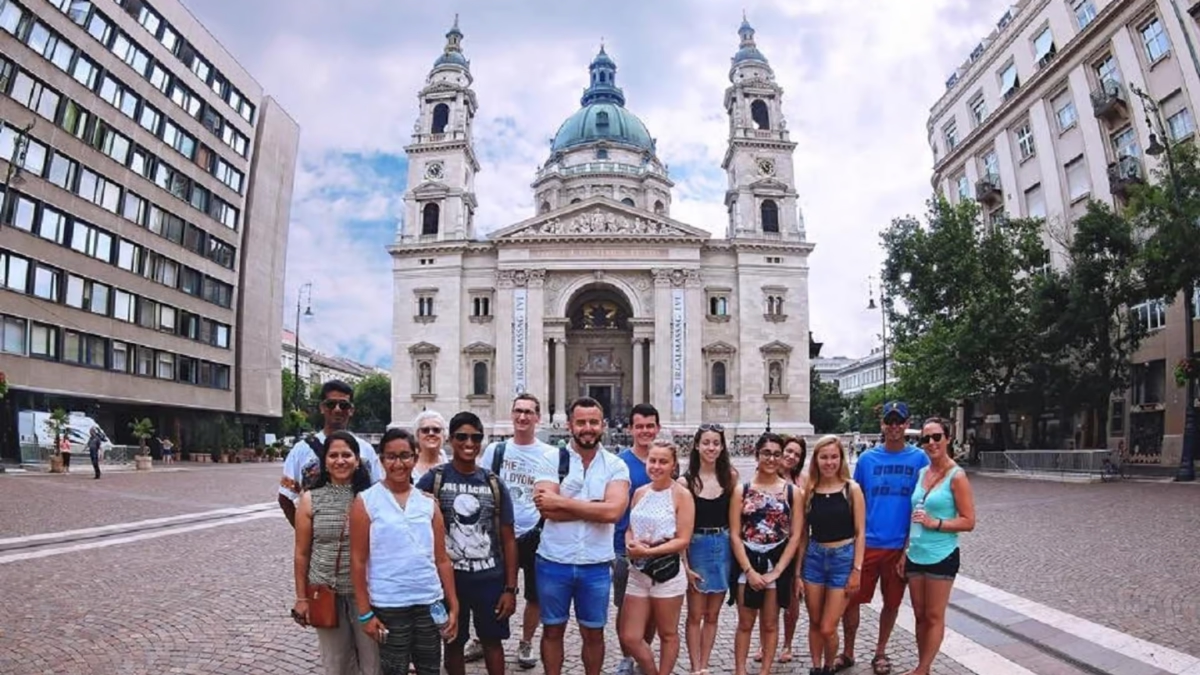
St. Stephen’s Basilica (Szent István Bazilika) is Hungary’s most important Roman Catholic church, standing at 96 metres in central Pest — deliberately equal in height to the Hungarian Parliament Building, symbolising the balance of spiritual and worldly power. Construction took 54 years (1851–1905) under three successive architects. The basilica is not directly on the Danube riverfront but its dome is visible from the river as part of the Pest skyline. Its panoramic terrace offers one of the finest views in Budapest. The basilica houses the Holy Right Hand of St. Stephen — Hungary’s most sacred relic.
St. Stephen’s Basilica is one of Budapest’s two defining skyline landmarks — its 96-metre dome rising above the Pest rooftops as part of the riverfront panorama visible from every Danube cruise. This guide covers the Basilica’s history, what you can see from the river, and how to visit.
St. Stephen’s Basilica and the Budapest Danube Skyline
St. Stephen’s Basilica stands about 400 metres back from the Danube riverfront — not on the waterfront itself, but its 96-metre dome rises clearly above the lower buildings between it and the river, making it a significant element of the Pest skyline as seen from a cruise.
From the water, the dome appears above the roofline of the riverside buildings, particularly visible on the stretch between the Chain Bridge and Margaret Bridge. On a clear day — especially from the upper deck of a cruise boat — the dome is immediately recognisable as a distinct round form behind the taller edge of the Pest embankment.
Conversely, from the Basilica’s own panoramic terrace, the Danube is visible as a glittering band in the middle distance, with Buda Castle and the Buda hills rising beyond it. The terrace is one of the finest elevated viewpoints in Budapest — arguably better than Fisherman’s Bastion for Pest-side photography.
St. Stephen’s Basilica Budapest — History and Architecture
54 Years in Construction
Construction of the Basilica began in 1851 under architect József Hild. In 1868 — with the lower walls complete but the dome unfinished — the central structure collapsed in a catastrophic construction failure. The building had to be largely demolished and rebuilt from the ground up. Hild died in 1867; the project was taken over by Miklós Ybl, Hungary’s most celebrated architect of the era, who modified the design from Neoclassical to Neo-Renaissance.
Ybl died in 1891 with the work still unfinished. The final architect, József Kauser, completed the project in 1905 — 54 years after construction began. At the consecration mass, Emperor Franz Joseph is said to have spent much of the service looking nervously upward at the new dome. Given what had happened to the previous one, the anxiety was understandable.
The 96-Metre Symbolism
The dome’s height of precisely 96 metres matches the Hungarian Parliament Building — a deliberate architectural decision expressing the principle that spiritual and worldly power in Hungary hold equal importance. This symbolic equality was so significant that Budapest’s building regulations for many decades prohibited any structure from exceeding 96 metres, preserving the Parliament and the Basilica as the undisputed twin peaks of the city skyline.
The Holy Right Hand
The Basilica’s most extraordinary feature is the Holy Right Hand (Jobb) — the mummified right fist of Hungary’s first king, St. Stephen (crowned 1000 AD). This relic, housed in a golden reliquary in a side chapel, is Hungary’s most venerated national treasure. Pilgrims and tourists alike visit specifically to see it. A 100-forint coin lights up the display case for a few minutes.
Visiting St. Stephen’s Basilica Budapest
Interior: Open daily; entry fee applies. Smart casual dress required; shoulders and knees should be covered.
Dome and Terrace: Accessible by lift or approximately 300 stairs (the lift takes you most of the way; a short staircase follows). The panoramic terrace offers 360-degree views including the Parliament, Buda Castle, Gellért Hill, and the Danube. One of the best viewpoints in the city.
Organ concerts: The Basilica hosts regular classical music and organ concerts — Thursday evenings are particularly popular. Combining a concert with a Danube cruise makes for an exceptional Budapest evening.
Location: Szent István tér, Budapest 1051 (M1 Bajcsy-Zsilinszky út, M3 Arany János utca, or Deák Ferenc tér — all within 10–15 minutes’ walk).
Frequently Asked Questions
How tall is St. Stephen’s Basilica?
St. Stephen’s Basilica stands 96 metres tall, making it one of Budapest’s two defining skyline landmarks and a prominent feature visible from all Danube cruises passing through the city.
Why is it called St. Stephen’s Basilica?
The basilica is named after St. Stephen, Hungary’s first Christian king. It houses the Holy Right Hand (Szent Jobb), a sacred relic of St. Stephen, which remains the basilica’s most venerated artifact.
Can you climb to the top of the dome?
Yes, visitors can climb to the top of the dome for 360-degree panoramic views of Budapest and the Danube. The ascent is partially assisted by an elevator, making it accessible to most visitors.
How long does a typical visit to St. Stephen’s Basilica take?
An interior visit alone takes 30 minutes to an hour; adding the dome climb extends your visit to approximately 1.5–2 hours depending on pace and time spent at the reliquaries.
Is there an admission fee to enter St. Stephen’s Basilica?
Yes, there is an entrance fee to explore the basilica interior and view the reliquaries. The dome climb typically costs extra and has a separate ticket.
Can you see St. Stephen’s Basilica from a Danube cruise?
Yes, the basilica’s 96-metre dome is one of Budapest’s two defining skyline landmarks and is clearly visible from all Danube cruises, particularly when viewing the riverfront panorama from the water.
