
Buda Castle & Castle Hill from the River
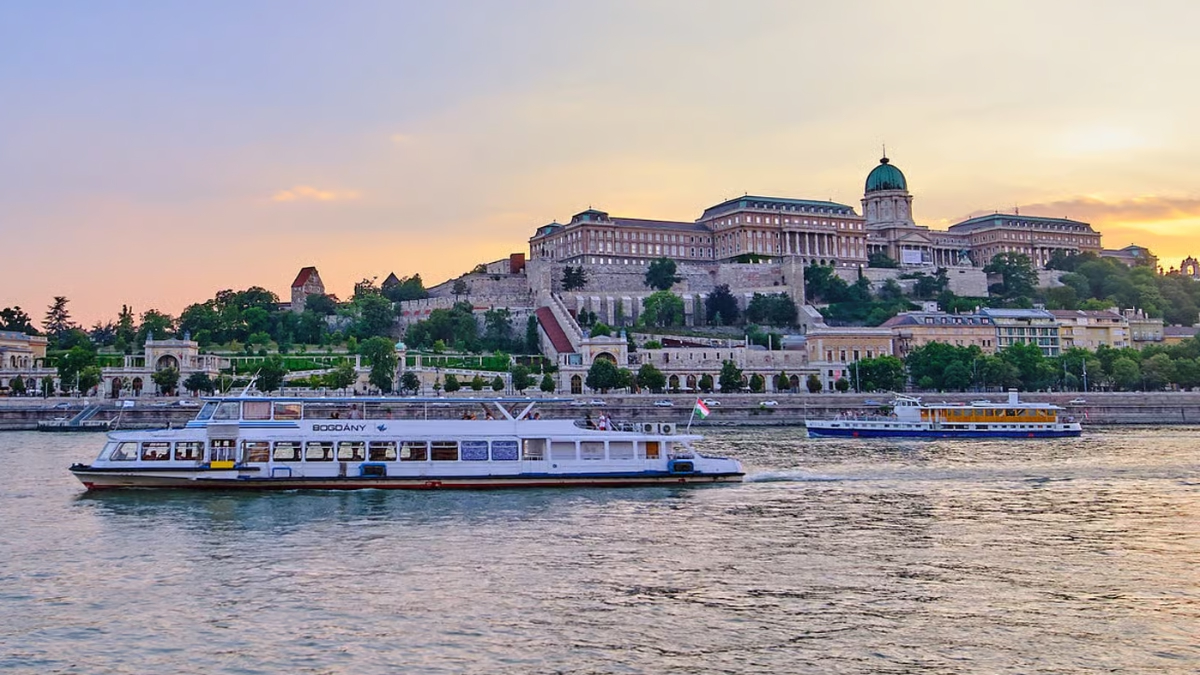
Buda Castle (Budavár) stands on Castle Hill (Várhegy) on the Buda side of the Danube — a 13th-century royal fortification rebuilt multiple times, devastated in World War II, and restored between 1960 and 1980. Today it houses the Hungarian National Gallery, the Budapest History Museum, and the Széchenyi National Library. From a Danube cruise, the castle’s baroque silhouette dominates the Buda bank from the Chain Bridge to the Elizabeth Bridge — with Fisherman’s Bastion’s white towers visible above, and the Várkert Bazár gardens cascading toward the river below.
Buda Castle and Castle Hill form the defining western skyline of every Budapest Danube cruise — the hilltop ensemble of palace, towers, and terraced gardens that faces the Parliament across the river. This guide covers what you see from the water and the history behind it.
Buda Castle from the Danube — What You See
Castle Hill rises directly from the Buda bank of the Danube to a height of approximately 60 metres above the river. From a cruise, the full extent of this hilltop ensemble is visible in a single uninterrupted view — something impossible from street level in Pest, where individual buildings block the sightlines.
The main elements you see from the water, from south to north, are:
Várkert Bazár (Castle Garden Bazaar) — The neo-Renaissance terraced garden complex at the base of the hill, designed by Miklós Ybl and completed in 1882. Recently restored to its original splendour, it cascades down from the castle toward the river in a series of arcaded galleries, fountains, and terraces. From the cruise, it forms the elegant transition between the water and the hilltop.
Buda Castle itself — The Hungarian flag flies above the central domed roof of the royal palace. The eastern façade of the palace faces the Danube directly — a long Baroque composition with green copper roofs, Habsburg-era wings, and the central dome. At night, this façade is lit from within the courtyards, creating a warm amber glow visible from far up and down the river.
Castle Funicular — The bright-red cars of the Budavári Sikló (Budapest’s castle funicular, the second oldest of its kind in the world, opened 1870) can sometimes be seen ascending and descending the hillside between Clark Ádám tér and the castle courtyard.
Fisherman’s Bastion towers — Visible above and to the north of the castle, the white Neo-Romanesque turrets of Fisherman’s Bastion peek through the trees above the Buda bank. See our dedicated Fisherman's Bastion guide for more detail.
Buda Castle Budapest — History
Medieval Origins
Castle Hill began to be settled seriously in the 13th century, after King Béla IV ordered a fortified hilltop settlement following the devastating Mongol invasion of 1241–42. The strategic value of the 60-metre rock above the Danube was obvious — it commanded river traffic and was naturally defensible. A royal castle was built here, expanded over subsequent centuries by the Angevin and Jagiellonian dynasties. By the late 15th century, under King Matthias Corvinus, the Buda Castle complex was one of the finest Renaissance palaces in Europe.
Ottoman Period and Decline
The Ottomans captured Buda in 1541 and held it for 145 years. During this period, the castle declined from a royal residence to a military garrison and fell into disrepair. When the Habsburgs retook the city in 1686 after a siege that left the castle in ruins, the reconstruction was essentially a new building project rather than a restoration.
Habsburg Reconstruction and World War II
The Habsburgs rebuilt the castle in baroque style across the 18th century, and it became the Hungarian royal residence within the Austro-Hungarian Empire. In 1944–45, the castle was the site of one of World War II’s most devastating urban battles — the Siege of Budapest, in which the castle hill was defended street by street for weeks. Almost the entire hilltop district was destroyed. Reconstruction was carried out between 1960 and 1980, with some controversial compromises on architectural authenticity.
Visiting Buda Castle and Castle Hill
The castle complex is accessible by funicular from Clark Ádám tér (near the Chain Bridge), by the castle bus (route 16), or by a steep but manageable walk up the hillside paths. The National Gallery and History Museum require separate tickets. The courtyards are publicly accessible free of charge. For the best views back across the Danube to Pest, the eastern terrace of the castle courtyard and the walkways above the Várkert Bazár are outstanding — and largely overlooked compared to the more famous Fisherman’s Bastion viewpoint.
Frequently Asked Questions
What can you actually see of Buda Castle from a Danube cruise?
From the river, you see the castle’s southern and western facades rising from the hilltop, including the distinctive multi-colored roof tiles, towers, and the terraced gardens cascading down the slope. The white Fisherman’s Bastion is also visible on the hill beside the palace.
When was Buda Castle originally built?
Construction began in the 13th century after the Mongol invasions, with major expansion under King Sigismund in the 15th century and again during the Austro-Hungarian period. The castle has been destroyed and rebuilt multiple times, with the current structure largely dating to the 18th and 19th centuries.
Is Buda Castle actually open to visitors, or is it just a landmark to see from the river?
Yes, Buda Castle is fully open to the public and houses museums, including the Budapest History Museum and Hungarian National Gallery. You can explore the courtyards, gardens, and interiors with a ticket.
How do you get up the steep hill to visit Buda Castle and Castle Hill?
You can take the Buda Castle Funicular Railway from the base (near Chain Bridge), walk up the terraced paths and stairs, or drive to the top parking area. The funicular is the easiest option for most visitors.
What’s the white structure next to Buda Castle that looks like a fortress?
That’s Fisherman’s Bastion, a 19th-century terrace built to commemorate a medieval defensive bastion. It was never a real fortress but is now one of Budapest’s most iconic viewpoints, with panoramic views of the Danube and Parliament.
How much time should you budget to visit Buda Castle and Castle Hill?
Plan 2–3 hours to explore the castle grounds, museums, and terraces at a moderate pace; 4–5 hours if you want to visit the museums in depth. The funicular takes about 2 minutes, and walking around the hilltop typically takes 1–2 hours.
