
Margaret Island — Budapest's Green Oasis on the Danube
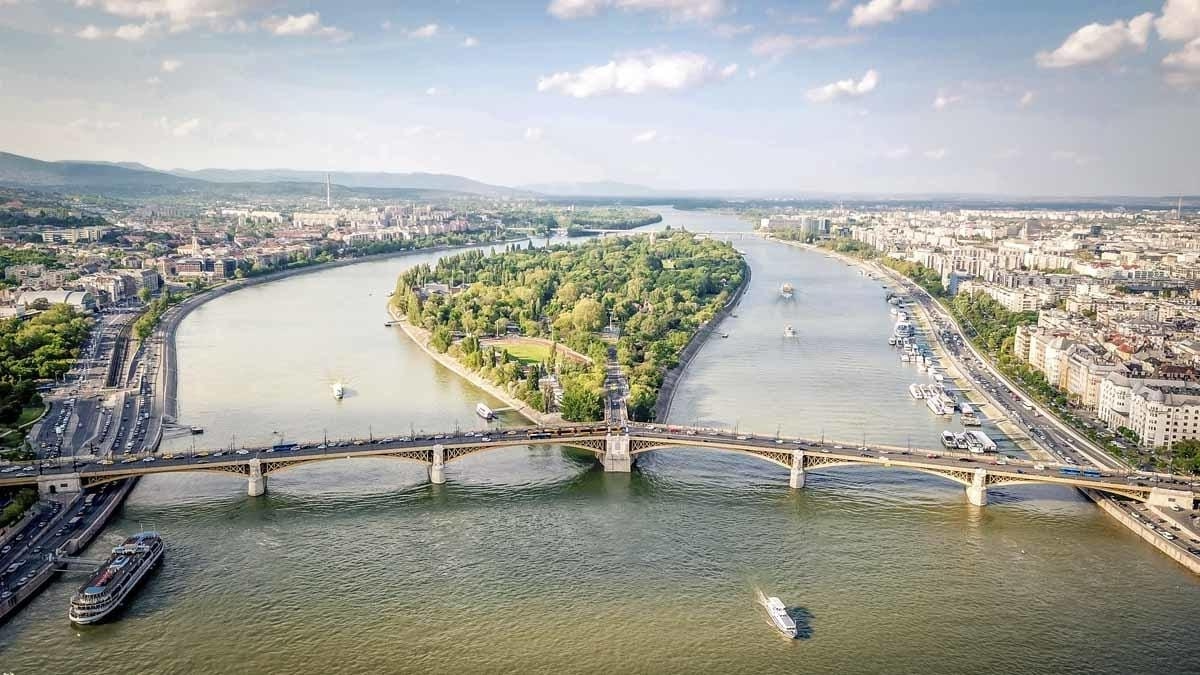
Margaret Island (Margitsziget) is a 2.5 km long, 500 m wide island in the middle of the Danube in central Budapest, between Margaret Bridge (south) and Árpád Bridge (north). Cars are banned on the island (except hotel service vehicles), making it a rare car-free green space in the centre of the city. It contains medieval ruins, thermal baths, sports facilities, a musical fountain, gardens, and two hotels. Named after Princess Margaret of Hungary, the daughter of King Béla IV, who lived in a Dominican convent on the island in the 13th century. From a Danube cruise, Margaret Island appears as a wooded, tree-lined silhouette between the two named bridges — a green interruption in the city’s stone and concrete skyline.
Margaret Island is Budapest’s car-free green oasis in the middle of the Danube — a 2.5 km island with medieval ruins, thermal baths, gardens, and sports facilities, visible from every city cruise that extends to the northern section of the river route.
Margaret Island — What You See from a Danube Cruise
From a Danube cruise, Margaret Island appears as a long green mass between Margaret Bridge and Árpád Bridge. The tree canopy — ancient plane trees, poplars, and willows — rises above the river level and gives the island a distinctly different character from the stone-and-glass banks on either side.
On the southern tip of the island, where Margaret Bridge connects to the bank, you can see the island’s entry point. Looking further north, the 57-metre Water Tower (built in 1911 in the Secessionist style) rises above the tree canopy — a distinctive landmark visible from the river.
On some daytime cruise routes, the boat makes a loop around the southern end of Margaret Island, and in summer some operators offer an optional stop on the island. See the Daytime Sightseeing Danube River Cruise for more details.
Gellért Hill and Citadel Budapest — History of Margaret Island
The Island of Rabbits
Before the 14th century, Margaret Island was known as Insula Leporum — the Island of Rabbits — a royal hunting ground. The island served as a religious centre through the Middle Ages: the Knights of St. John established a monastery here in the 12th century, followed by the Franciscans, Dominicans, Augustinians, and Premonstratensians. At its peak, the island was almost entirely covered by monastic buildings and churches.
Princess Margaret
The island takes its current name from Princess Margaret (1242–1271), the daughter of King Béla IV, who lived in the Dominican convent here from the age of four. Her father had vowed to dedicate a child to God if Hungary survived the Mongol invasion; Margaret was the fulfilment of that vow. She lived a life of severe penance and was venerated as a saint even before her official canonisation in 1943. The ruins of her convent — including her grave — are still visible on the island today.
From Royal Reserve to Public Park
After the Ottomans devastated the island’s monasteries in the 16th century, it became a royal garden and hunting reserve. It passed to the Habsburgs and then to the Palatine of Hungary. In 1867, the first thermal well was drilled on the island, bringing 43.8°C water to the surface — transforming Margaret Island into a recognised spa destination. The Palatinus Thermal Baths (Budapest’s first outdoor bath, opened 1919) grew from this thermal discovery and remain a major attraction today. The island became a fully public park accessible to all in 1908.
What to See on Margaret Island Budapest
- Ruins of the Dominican Convent — 13th-century ruins of the convent where Princess Margaret lived, including her grave
- Ruins of the Franciscan Church — 13th-century church remains on the southern end of the island
- The Water Tower — 57-metre 1911 Secessionist tower with panoramic views; accessible in summer
- Palatinus Thermal Baths — Budapest’s largest outdoor bath complex with thermal pools, wave pool, and water slides
- Musical Fountain — nightly music and light show (summer months)
- Rose and Japanese Gardens — formal gardens in the island’s interior
- Bicycle rental — 4-person cycle cars and electric vehicles for island exploration
Getting to Margaret Island Budapest
Trams 4 and 6 cross Margaret Bridge and stop at the southern tip of the island. Bus routes 26 and 226 run the length of the island. Entry is free; no car access (except taxis and service vehicles).
Note: Gellért Thermal Baths (not on Margaret Island) are closed for renovation until 2028 — the Palatinus Baths on Margaret Island are a recommended alternative.
Frequently Asked Questions
Can you visit Margaret Island during a Danube cruise?
Most river cruises pass Margaret Island or extend to its northern tip for views, but few actually dock there; some longer itineraries include a walking tour stop. Check your cruise itinerary beforehand, as many routes treat it as a scenic viewpoint rather than a visitor destination.
Are the thermal baths on Margaret Island open to the public?
Yes, the thermal spa facilities on Margaret Island are open to visitors year-round. The baths use the island’s natural thermal springs and offer various pools and wellness treatments.
What medieval ruins can you actually explore on Margaret Island?
You can see the remains of a 13th-century Dominican monastery and a Franciscan chapel, plus fragments of a medieval palace. These ruins are freely accessible throughout the island as part of the pedestrian paths.
How long should you plan to spend on Margaret Island?
Most visitors spend 2–3 hours exploring the gardens, ruins, and lakeside paths, though you can stay longer if using the thermal baths or sports facilities. The 2.5 km length makes it manageable in an afternoon.
Is Margaret Island truly car-free?
Yes, Margaret Island is completely car-free—only pedestrians, cyclists, and official service vehicles are allowed. This makes it a peaceful retreat from Budapest’s busier streets.
What’s the best way to reach Margaret Island from central Budapest?
You can walk or cycle via the Margaret Bridge from downtown Pest, or take tram 4/6 to the bridge and walk across. There’s also direct bus access to the island during peak season.
