
Fisherman's Bastion — Views Over the Danube
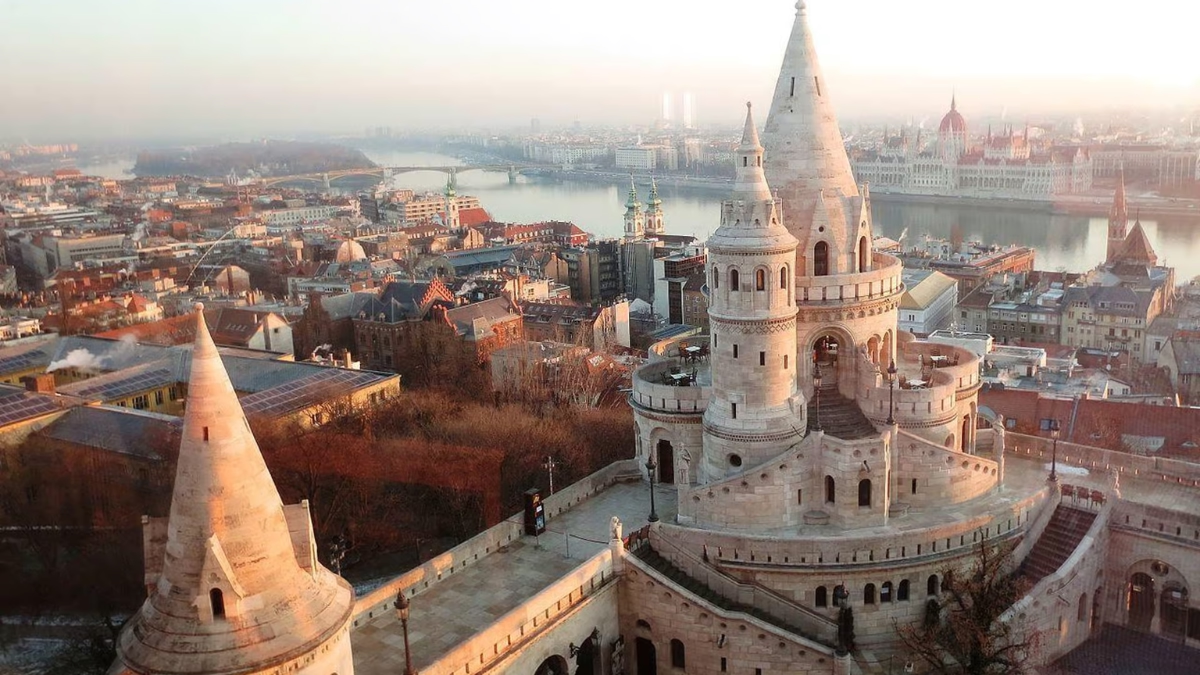
Fisherman’s Bastion (Halászbástya) is a Neo-Romanesque terrace and lookout on Castle Hill, built between 1895 and 1902 by architect Frigyes Schulek. Its seven towers symbolise the seven Magyar tribes that settled the Carpathian Basin in 895 AD. From the bastion’s terraces, the view across the Danube to the Hungarian Parliament Building is considered one of the finest urban panoramas in the world. From a Danube cruise, the white towers of Fisherman’s Bastion are visible on the hillside above the Buda bank, framed by the green trees of Castle Hill. The lower terraces are free to visit; entry to the upper towers requires a ticket (free before 9 AM and after around 9 PM).
Fisherman’s Bastion offers what many consider the finest single viewpoint in Budapest — and it appears on the Buda hillside on every Danube river cruise. This guide explains what it is, why it was built, what you see from it, and how it looks from the river.
What Is Fisherman’s Bastion Budapest?
Fisherman’s Bastion is one of the most recognisable and photographed buildings in Budapest — a fairy-tale arrangement of white stone towers, arched galleries, and terraced balconies on the western edge of Castle Hill, facing the Danube and Pest. Despite its medieval appearance, it is not a medieval fortress. It was built between 1895 and 1902 as an ornamental lookout terrace and promenade, designed by architect Frigyes Schulek as part of the celebrations for Hungary’s millennium in 1896.
The name comes from the fishermen’s guild that historically defended this section of the castle walls and operated the fish market at the foot of the hill. The current Neo-Romanesque structure is entirely Schulek’s creation — an architectural confection designed to provide spectacular views while paying homage to Hungary’s medieval past.
The Seven Towers
The bastion’s seven high-pitched towers are its most distinctive feature. Each represents one of the seven Magyar chieftain tribes that led the Hungarian conquest of the Carpathian Basin in 895 AD — the foundational moment of the Hungarian state. The towers range from small corner turrets to the taller central towers, all in the same bleached white stone.
The View from the Bastion
The panorama from Fisherman’s Bastion terrace is widely considered the finest view of the Budapest Danube from land. Looking east across the river, the full sweep of the Pest embankment is visible: the Parliament Building to the north, the Chain Bridge in the centre, and the Danube Promenade below. From the upper towers, on a clear day, the view extends beyond the central city into the Pest lowlands.
Fisherman’s Bastion — View from a Danube River Cruise
From a Danube cruise, Fisherman’s Bastion’s white towers are visible on the hillside above the Buda bank — appearing above the Várkert Bazár terraces and the tree canopy of Castle Hill. They are not as prominently visible as Buda Castle or Gellért Hill from the river, but on a clear night the white stonework catches the floodlighting and the towers glow distinctly above the dark hillside.
The combination of Fisherman’s Bastion, Matthias Church’s coloured-tile roof, and Buda Castle’s baroque façade forms the full Castle Hill skyline visible from the Danube — an ensemble that is at its most impressive when viewed from the centre of the river on an evening cruise.
Visiting Fisherman’s Bastion Budapest
Access: The lower terraces and balconies are free to visit at all hours. Entry to the upper towers requires a ticket, available at the ticket office near the Matthias Church entrance. Free entry before 9 AM and after approximately 9 PM.
Getting there: Take the castle bus (route 16) from Clark Ádám tér near the Chain Bridge, or the castle funicular, or walk up the hillside paths. The bastion is a 10–15 minute walk from the funicular upper station. From Batthyány tér (M2 metro), there are also hillside paths leading up.
Best times: Early morning (before 9 AM) for free entry and minimal crowds. Sunset for the best photography of the Parliament across the river. Avoid weekend afternoons in summer — the bastion is one of the busiest tourist spots in Budapest.
Frequently Asked Questions
Is there an entrance fee to visit Fisherman’s Bastion?
The main terraces and walkways are free to explore, but the two neo-Gothic towers charge a small entry fee (typically 500–700 HUF) to climb to the upper levels for premium views.
Can you see Fisherman’s Bastion from a Danube river cruise?
Yes — it’s one of the most photographed landmarks on the river and appears prominently on virtually every Danube cruise from Budapest. The white limestone towers are instantly recognizable from the water.
What time of day is best to visit Fisherman’s Bastion for photography?
Golden hour (sunrise or shortly after sunset) provides the most dramatic lighting on the white stone and the Danube beyond. Early mornings (before 8 AM) offer the fewest crowds if you prefer solitude.
How long does a typical visit to Fisherman’s Bastion take?
Plan 30 minutes to 2 hours depending on crowds and whether you climb the towers. On peak summer days, queuing alone can add 30–45 minutes.
What exactly will I see from Fisherman’s Bastion on a clear day?
A 360-degree panorama including the Danube River directly below, Margaret Island upstream, Parliament Building, the Chain Bridge, Elisabeth Bridge, and the entire Pest skyline across the river.
Is Fisherman’s Bastion accessible if I have mobility issues?
The main terrace level is accessible via ramps and gentle slopes, but the narrow walkways and multiple levels make it challenging for wheelchair users. The towers are not accessible due to steep, narrow stairs.
